School psychology programs prepare professionals to support students’ mental health, learning & behavioral needs within educational settings.
These programs focus on skills such as assessment, counseling & intervention to foster positive student outcomes.
Graduates contribute to creating inclusive environments that enhance student wellbeing & academic success.
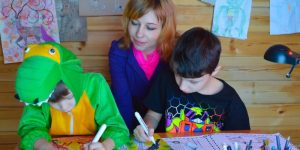
School psychologists are some of the most in-demand professionals.
The U.S. Bureau of Labor Statistics (2021) reported that the field for clinical, counseling, and school psychologists is expected to grow by 3% between 2019 and 2029.
If you are considering a career in school psychology, this article will provide you with an overview of the requirements for school psychologists in North America and also give you a selection of the best school psychology programs.
Before you continue, we thought you might like to download our five positive psychology tools for free. These ready-made tools are perfect for enhancing your teaching approach, making it easier to engage students in meaningful, student-centered learning.
Admission to a clinical psychology program usually requires individuals to have a bachelor’s degree in psychology or science with a grade point average of 3.0 or higher.
Most schools also require prospective students to complete the Graduate Requisite Exam, a standardized test that measures quantitative reasoning, analytical writing, and critical-thinking skills (ETS, n.d.a).
Most graduate school psychology programs are broken up into three components, with the focus and attributes varying depending on the institution:
Coursework:
Students take courses focused on standards of clinical practice, psychopathology, research methods, and specific areas of school psychology.
Practicum/Internship:
Students enter the field as psychological professionals and learn alongside certified members in a variety of settings (e.g., private clinics, schools, learning centers).
Research:
Based on their interests and expertise, students choose an area to engage in independent research and complete a major research project (i.e., thesis, dissertation).
The qualifications necessary to become a school psychologist vary by country and state and differ from those to become a school counselor. Typically, individuals practicing with a master’s degree are referred to as psychological associates, and they work alongside educational psychologists to test, diagnose, and treat children.
Even though a psychological associate is extremely involved in the diagnostic process, they cannot independently render a diagnosis. If they want to diagnose children independently, they need to pursue a doctorate to be a fully certified psychologist. However, it is important to check the specific local requirements.
Upon completion of both a master’s degree and a doctorate in school psychology, most areas require you to take examinations so you can register with a regulatory body that governs standards of practice across all areas of clinical psychology.
In the United States, the Praxis test (ETS, n.d.b) measures whether entry-level psychologists meet the standards of practice and is required to register with the National School Psychology Board (NCSP). However, the requirements for registration vary by region and country, so it is important to check the most up-to-date information wherever you are planning to obtain certification.
5 Best School Psychology Master’s & Doctorate Degrees
There are many opportunities to study school psychology in North America.
We have outlined a selection of great clinical master’s and doctoral programs that highlight school psychology as a central focus.
The programs were selected based on a combination of ratings from the TimesHigher Education (2021) World University Rankings and focus on school psychology, rather than educational psychology or a broader combination of psychological disciplines.
1. Doctor of Philosophy in School Psychology (PhD), Indiana University–Bloomington, United States
This doctorate program combines research, theory, and real-world experience.
The program takes between five and six years to complete and has 800 hours of practicum, as well as 1,500 hours of internship, allowing students to gain significant experience and connections in the field.
Indiana University has a strong focus on field-based research to ground its students in practical theory. A few of the course options that are relevant to school contexts include autism spectrum disorders, social justice/educational equity, school-based mental health, trauma, emotional and behavioral disorders in students, and action research.
This program is accredited by the American Psychological Association (APA) and the National Association of School Psychologists (NASP).
2. Doctor of Philosophy in School Psychology (PhD), University of Wisconsin–Madison, United States
This PhD program uses a scientist-scholar-practitioner model to prepare graduates for positions as university professors, school psychologists in K-12 settings, and professionals in organizations that support children, youth, and families.
Blending in-depth academic research with practical experience, the program is fully accredited by both the APA and NASP.
Practical training opportunities include working with both general education and special needs populations, as well as assisting families, peer groups, and school communities.
3. Master’s/Certificate of Advanced Graduate Study (CAGS) in School Psychology, William James College, Massachusetts, United States
This program combines a competency-based curriculum with closely supervised field training. It is intended for individuals who are passionate about helping children and adolescents.
As part of the program, first-year students work in elementary schools, second-year students work in middle or high schools, and third-year students finish a full-time internship that is customized to their career objectives.
This program is a great option for those looking to specialize in student diversity and want to apply a specific concentration to their research on issues faced by different groups of people.
4. Doctor of Philosophy in School Psychology (PhD), University at Buffalo, State University of New York, United States
This program provides students with a combined degree in school and counseling psychology, which allows graduates to practice outside educational settings while still taking the knowledge they have gained to support clients in other settings.
The major difference between the two disciplines is that the counseling psychology program focuses more on diagnosis and treatment in older adults and adolescents in clinical settings such as hospitals and post-secondary institutions, while school psychology focuses on children and young adults.
Students have the option to complete their practicum hours in both settings to help them gain expertise and experience with both groups, broadening their horizons for future clinical practice.
5. Master of Psychology in School and Applied Child Psychology (MA), McGill University, Montreal, Canada
McGill’s program aims to prepare future school psychologists to work with educators, children, youth, and families to promote individuals’ learning and development, particularly in relation to schooling and mental health.
Students in the MA program or with an MA in a related field can apply for entry to the PhD program. The program aims to provide students with an understanding of strategies to help promote wellbeing in children and adolescents, while maintaining high international standards in the field.
Students explore a variety of topics including mental health, child development, school organization, learning processes, behavior, motivation, and effective teaching.
The program is accredited by the Canadian Psychological Association (CPA) and the Order of Psychologists in Quebec. CPA accreditation is accepted by most states, as well as the APA.
Start thriving today with 5 free tools grounded in the science of positive psychology.
Download Tools
Top 3 Programs & Certification Opportunities
Below, we have included the best programs to prepare you for a career in school psychology.
Even though not all these programs have a specific department focusing on school psychology, these departments focus on topics that are directly related to developing students’ knowledge of developmental and child psychology, which are central topics in school psychology.
1. Master of Education in Human Development Counseling, Clinical Mental Health or School Counseling (MEd), Vanderbilt University, Tennessee, United States
This top-ranked school offers two Master of Education degrees (clinical mental health and school counseling) that aim to provide students with a theoretical grounding in human development and counseling.
The program gives students the opportunity to pursue licensure as professional counselors in clinical mental health or school counseling. There is also a dual option available for students who meet the requirements for both specializations.
2. School and Applied Child Psychology, University of British Columbia, Vancouver, Canada
This program has several degree options designed to prepare students for a career in school and applied psychology.
One of the distinguishing elements of the School and Applied Child Psychology program is the strong emphasis on equity and diversity, specifically in social justice and human rights.
This program has certification opportunities for students to become a school psychologist. Students can also obtain a Master of Education (MEd) in School and Applied Psychology. While the MEd program acts as a direct entry to practice, the MA and PhD programs act as a dual program, and students in the MA program typically pursue a PhD.
3. Department of Applied Psychology and Human Development, University of Toronto: Ontario Institute for Studies in Education, Canada
The Ontario Institute for Studies in Education is part of the University of Toronto and considered to be a global leader in graduate programs in teaching, learning, and higher education.
The Department of Applied Psychology and Human Development engages in research centered on mental health, wellbeing, and education.
Potential programs are listed below:
Child study and education (teacher education program)
Counseling and clinical psychology
Counseling psychology
Developmental psychology and education
School and clinical child psychology
With a combination of accredited school and counseling psychology programs, teacher education, and academic programs, graduating students will be well placed to pursue a career in school psychology-related domains.
Because of an influx in online learning, there are several options for students to conduct most of their graduate studies online.
This section provides a sample of online programs that provide hybrid or fully online instruction.
Prior to selecting one of these programs, prospective students should consider their learning style, as online instruction is typically more independently oriented and requires more individual discipline. Online classes may not include a lot of in-person guidance or interaction.
1. Master of Science (MS) & Education Specialist (EdS) in School Psychology (remote), Fort Hays State University, Kansas, United States
This online program is designed for students who want to pursue a career in school psychology with the flexibility of online education. It also offers part-time and full-time options, depending on students’ needs.
The program is fully remote and only requires students to come on campus for one five-day workshop on appraising and evaluating children, which takes place during the summer semester when there is a reduced course load. This makes the program more accessible to students across the United States.
Students also have the option to choose from three program tracks, giving them flexibility to choose their courses depending on when they want to take on the bulk of their workload. This makes this program ideal for students who are already working or looking to complete the program full time.
2. Master of Arts (MA) Educational Psychology (School Psychometry), University of Alabama, United States
This is a hybrid graduate program designed for educators seeking advanced skills in psychological assessment, data interpretation, and evidence-based intervention.
Psychometrics are highly integrated along with practical school psychology courses that focus on intervention, prevention, instructional, and school psychology practice.
Graduates who meet all requirements are eligible for Alabama Class A School Psychometry certification, opening pathways to careers in schools, educational consulting, and related fields. Applicants must hold a valid professional educator certificate and have at least two years of professional P-12 experience.
3. Doctor of Psychology (PsyD) in School Psychology (remote), Capella University, United States
Capella offers a fully online program with several options for students to complete their degree on a pathway that works around their work and personal obligations.
The program aims to develop skills for clinical practice including psychological and neuropsychological assessment, clinical supervision and consultation, psychopathology of children and adolescents, and collaboration with school systems.
Although the program is not APA accredited, it gives many options for coursework and practicums that can work around a student’s location in the United States and cater to the specific area of child and school psychology in which students want to specialize.
Use these 17 Positive Education Exercises [PDF] to enhance student engagement, resilience, and wellbeing while also equipping students with valuable life skills.
We have many resources available to build your growing practice in school psychology.
Children require specialized interventions to help them manage their emotions and become more self-aware of their feelings and reactions. The Inside and Outside Worksheet and Self-Awareness Worksheet for Older Children are great exercises for children who you may be treating in a school-based setting.
Both exercises focus on increasing emotional awareness and connecting feelings with reactions, which are central objectives in child psychology.
If you want to integrate the evidence-based principles of positive psychology into the classroom, consider this collection of 17 validated positive education exercises. Use them to enhance student engagement, resilience and wellbeing while also equipping students with valuable life skills.
A Take-Home Message
School psychologists represent a critical field, using their expertise to apply mental health diagnoses and facilitate academic and social success in the school environment.
If this line of work interests you, gaining the skills and qualifications required to pursue a career in school psychology largely depends on where you live. However, even if a school or program is at the top of the ranking chart you are consulting, the method of delivery may not work for you.
First, take the time to understand how you work and learn best before consulting this list and making your choice. Make sure you consider the program that will work with your individual learning and personal needs.
What are the educational requirements to become a school psychologist?
Typically, a master’s or doctoral degree in school psychology is required, including coursework, supervised practicum or internship experiences, and completion of a thesis or dissertation. Certification requirements vary by state.
How long does it take to complete a school psychology program?
Master’s programs usually take two to three years, while doctoral programs can take four to seven years, depending on the specific program and whether it’s pursued full-time or part-time.
Can I pursue a school psychology program online?
Yes, some universities offer online or hybrid school psychology programs, providing flexibility for working professionals or those unable to attend on-campus classes.
Dr. Gabriella obtained a Ph.D. from the University of Toronto (OISE) in Developmental Psychology and Education where her research is centered around emotions, instruction, and online learning.
She currently works as a psychological consultant with children, adolescents, and adults in Toronto, Canada. In her spare time, she enjoys building her writing portfolio, spending time with her family, and walking her dog.
How useful was this article to you?
Not useful at all
Very useful
Share this article:
Article feedback
Comments
What our readers think
HealthTimes
on June 21, 2021 at 06:39
This is an amazing article. This gives a lot info so Thank you for sharing this.
 School psychologists are some of the most in-demand professionals.
 There are many opportunities to study school psychology in North America.







 Because of an influx in online learning, there are several options for students to conduct most of their graduate studies online.





What our readers think
This is an amazing article. This gives a lot info so Thank you for sharing this.