4 Fun Mindfulness Activities and Exercises for Children
Let’s start with these simple ways to attune children with their bodies. At a young age, humans are naturally curious about the strength and flexibility of their bodies. It’s a great age to introduce body-mind awareness as a valuable way to connect with themselves.
Mindful posing
One easy way for children to dip their toes into mindfulness is through body poses. To get your kids excited, tell them that doing fun poses can help them feel strong, brave, and happy.
Have the kids go somewhere quiet and familiar, a place they feel safe. Next, tell them to try one of the following poses (Young, 2017):
- The Superman: this pose is practiced by standing with the feet just wider than the hips, fists clenched, and arms reached out to the sky, stretching the body as tall as possible.
- The Wonder Woman: this pose is struck by standing tall with legs wider than hip-width apart and hands or fists placed on the hips.
Ask the kids how they feel after a few rounds of trying either of these poses and facilitate a discussion about the effects of mindful posing.
Spidey-senses
While on the subject of superheroes, this can be a related “next step” to teach kids how to stay present.
Instruct your kids to turn-on their “Spidey senses,” or the super-focused senses of smell, sight, hearing, taste, and touch that Spiderman uses to keep tabs on the world around him. This will encourage them to pause and focus their attention on the present, opening their awareness to the information their senses bring in (Young, 2017).
This is a classic mindfulness exercise and encourages observation and curiosity—great skills for any human to practice.
The mindful jar
This activity can teach children how strong emotions can take hold, and how to find peace when these strong emotions feel overwhelming.
- First, get a clear jar (like a Mason jar) and fill it almost all the way with water. Next, add a big spoonful of glitter glue or glue and dry glitter to the jar. Put the lid back on the jar and shake it to make the glitter swirl.
- Finally, use the following script or take inspiration from it to form your own mini-lesson:
“Imagine that the glitter is like your thoughts when you’re stressed, mad or upset. See how they whirl around and make it really hard to see clearly? That’s why it’s so easy to make silly decisions when you’re upset – because you’re not thinking clearly. Don’t worry this is normal and it happens in all of us (yep, grownups too).
[Now put the jar down in front of them.]
Now watch what happens when you’re still for a couple of moments. Keep watching. See how the glitter starts to settle and the water clears? Your mind works the same way. When you’re calm for a little while, your thoughts start to settle and you start to see things much clearer. Deep breaths during this calming process can help us settle when we feel a lot of emotions” (Young, 2017).
This exercise not only helps children learn about how their emotions can cloud their thoughts, but it also facilitates the practice of mindfulness while focusing on the swirling glitter in the jar.
Try having the kids focus on one emotion at a time, such as anger, and discuss how the shaken and then settling glitter is like that emotion.
Safari
The Safari exercise is a great way to help kids learn mindfulness. This activity turns an average, everyday walk into an exciting new adventure.
Tell your kids that you will be going on a safari: their goal is to notice as many birds, bugs, creepy-crawlies, and any other animals as they can. Anything that walks, crawls, swims, or flies is of interest, and they’ll need to focus all of their senses to find them, especially the little ones (Young, 2017).
A similar exercise for adults is the mindfulness walk. This exercise provokes the same response in children that a mindful walk elicits in adults: a state of awareness and grounding in the present.
If you’re interested in more information on how to encourage the practice of mindfulness in children and teens, you can check out the other exercises from this website. Otherwise, head on to the next section where we lay out key tips for teaching these concepts.
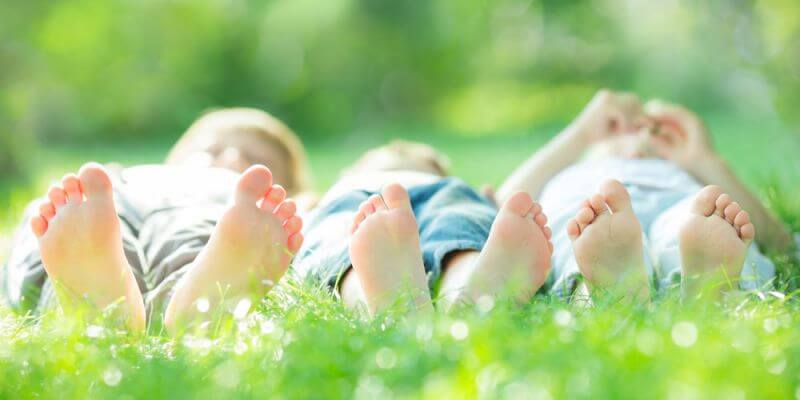 Mindfulness can boost the quality of our lives in numerous ways.


 The body scan is a key practice in mindfulness, and an easy one to teach to children.

 Executive function is a set of mental skills that constitutes attention, switching focus, planning, organizing, and remembering details.



What our readers think
“Wonderful resource! These mindfulness activities make it easy and fun for kids and teens to build focus, calm, and emotional balance.”
This list of 25 fun mindfulness activities for kids and teens is a fantastic way to help young minds slow down and focus in a busy world.
Great article. I wish you had a printer-friendly version for easier sharing with teachers.
Hi, are these available in Spanish?
Hi Lupe,
I’m afraid we do not currently have translations for our articles/activities. However, this is something we will keep in mind as we continue to develop the platform.
– Nicole | Community Manager
I would be interested in Spanish versions as well.
Google translate
Google docs translate under, TOOLS
Amazingg!!! Thank you so much!!
Working with young children…
The activities are very easily adaptable to Early Years Education. I am able to utilise and adapt most of the above ideas for the wellbeing of very young children. Simple and effective
Hi there, using this page as a resource to share with others. Children are already so mindful, its when we lose it we have to take a moment. I will definitely be practicing this myself!
Thank you for you work.
ee.unknown
This Mindfulness project is an awesome assit to help our population of children world wide
Thank you for the information of a newer way to help our student’s at school and home.
Thank you for helping staff to remaine healthier together in our work place.
All are fhysical activity are very helpful to burn extra calories.