Breaking Down Mental Health Stigma: Where to Find Support
The stigma around mental health still prevents many from seeking help. More than half of people with mental illness don’t want to receive treatment because they are afraid that they will be treated differently and might even lose their jobs (Centers for Disease Control and Prevention, 2025).
Mental health bias shows up in three ways (Corrigan & Watson, 2002; Centers for Disease Control and Prevention, 2025):
- Public stigma: how others respond to us
- Self-stigma: how we judge ourselves
- Structural stigma: the systems that make getting help harder than it should be
The impact can be significant. Stigma chips away at hope, erodes self-worth, can worsen symptoms, and makes it harder to stay connected at home, in friendships, and at work.
The good news is that it has never been easier to find help. Many workplaces and schools offer peer-to-peer support groups.
Your primary care physician might be the best resource for you if you want to avoid calling and testing different therapists. They might have the right referral for you.
Other resources include breathwork classes, meditation groups, community-centered yoga classes, and mental health classes offered at local libraries. Many public libraries offer access to psychoeducation courses and even quiet mindfulness groups.
Ask a librarian about health and wellness programs, and you might be surprised at what is available in your community for free or at a low cost.
Consider reaching out to mental health professionals when you notice persistent changes in behavior, mood, sleep, or appetite, or when daily activities become overwhelming.
Your path to mental wellbeing is personal and unique. Even small, steady steps can add up to real change (Pizzie et al., 2020). And when we talk openly, break through stigma, and treat mental health with compassion, we make it safer for everyone to get the care they deserve.
A Vital Take-Home Message
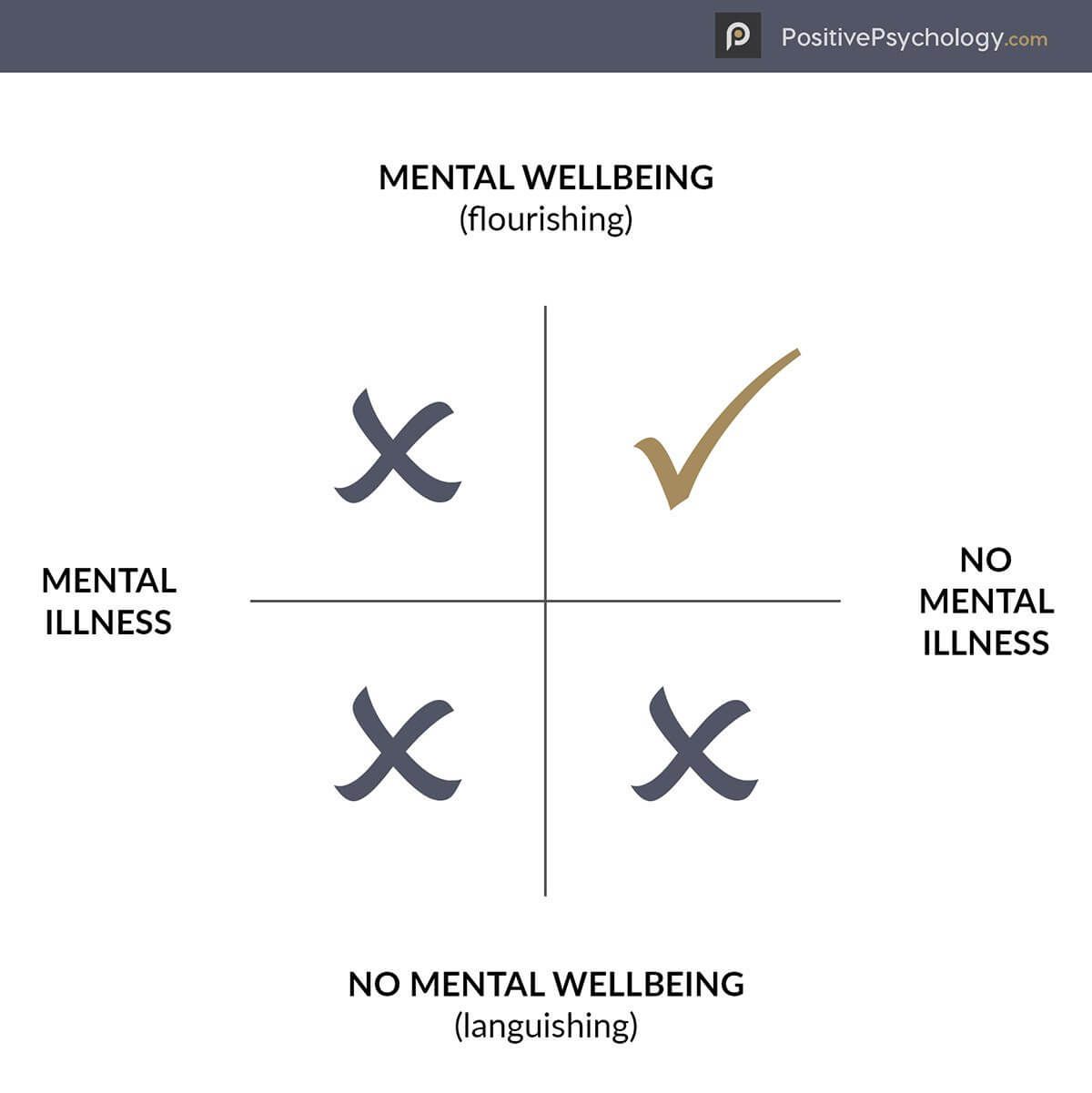
Mental health is the core of your wellbeing, and it is as vital as physical health (World Health Organization, 2025). It is the foundation for your ability to flourish in life, which is why it demands the same attention and care you give your body (Keyes, 2002; Seligman & Csikszentmihalyi, 2011).
When you start seeing mental health as a constantly shifting spectrum, not simply as “good or bad,” you will become better at noticing your needs. It also helps you understand when you need to reach out for help, instead of sweeping your concerns under the rug.
If you are struggling right now, understand that asking for support is not a weakness; it is one of the bravest things you can do.
Asking for help means you are self-aware and in touch with what you need. Perhaps you feel stuck and hope to move toward a brighter future, or you are working hard to manage ongoing challenges. No matter what, know that you are not alone.
We hope you enjoyed reading this article. Don’t forget to download our five positive psychology tools for free.
 When someone asks about your health, you probably think about your physical wellbeing first.